

💸 The "Sticker Shock" of the Growth Suite
You are a B2B Founder or CFO. You are staring at the spreadsheet.
- Option A (Zoho One): $45/user/month
- Option B (Pipedrive): $60/user/month
- Option C (HubSpot Sales + Marketing Pro): $1,600+/month (flat fee + seats)
The math looks simple. HubSpot appears 5× more expensive. Why pay a premium for “software” when cheaper tools claim to do the same thing?
This is the most common mistake scaling companies make. You are calculating sticker price — not Total Cost of Ownership (TCO).
In B2B tech, cheap software is like a cheap car. It looks fine on the lot, but maintenance, inefficiency, and breakdowns quietly drain your budget.
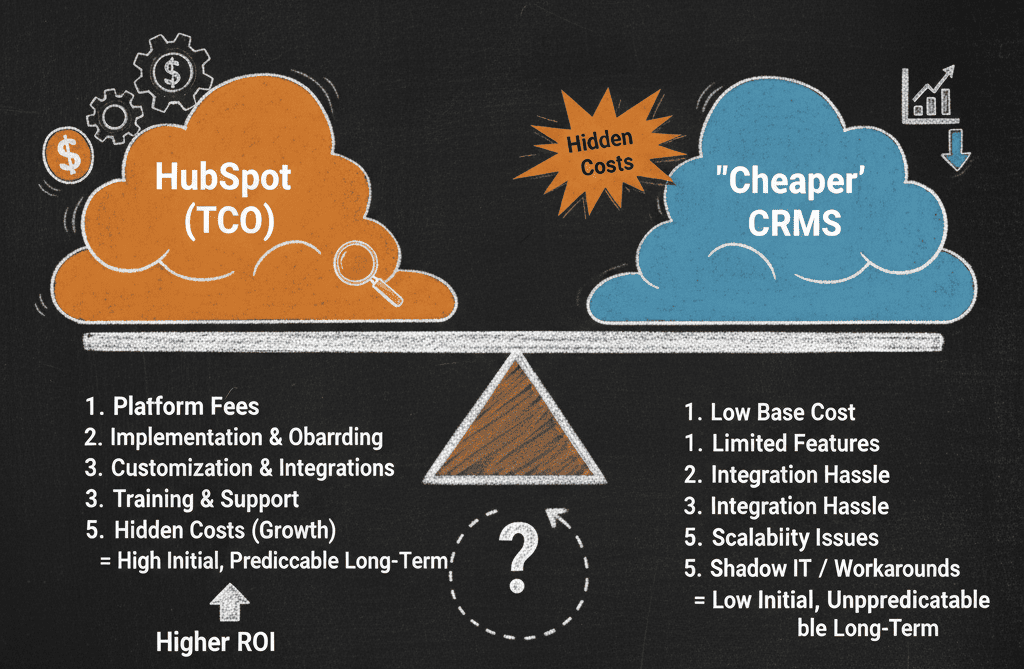
The real cost of HubSpot isn’t the license fee. It’s the value of the system versus the hidden costs of alternatives.
📉 1. The Cost of "Integration Spaghetti"
The Cheap Scenario: You buy Pipedrive ($60). But Pipedrive doesn't do marketing. So you buy Mailchimp ($200). It doesn't do service tickets. So you buy Zendesk ($100). It doesn't do complex reporting. So you buy a BI tool ($150).
Then, you realize they don't talk to each other.
- The Cost: You pay for Zapier ($100/mo).
- The Hidden Cost: You pay a RevOps Consultant ($5,000/year) just to fix the broken Zaps.
- The Real Cost: Your data is fragmented. You can't see "Marketing Attribution." You can't build a "Full Funnel" report.
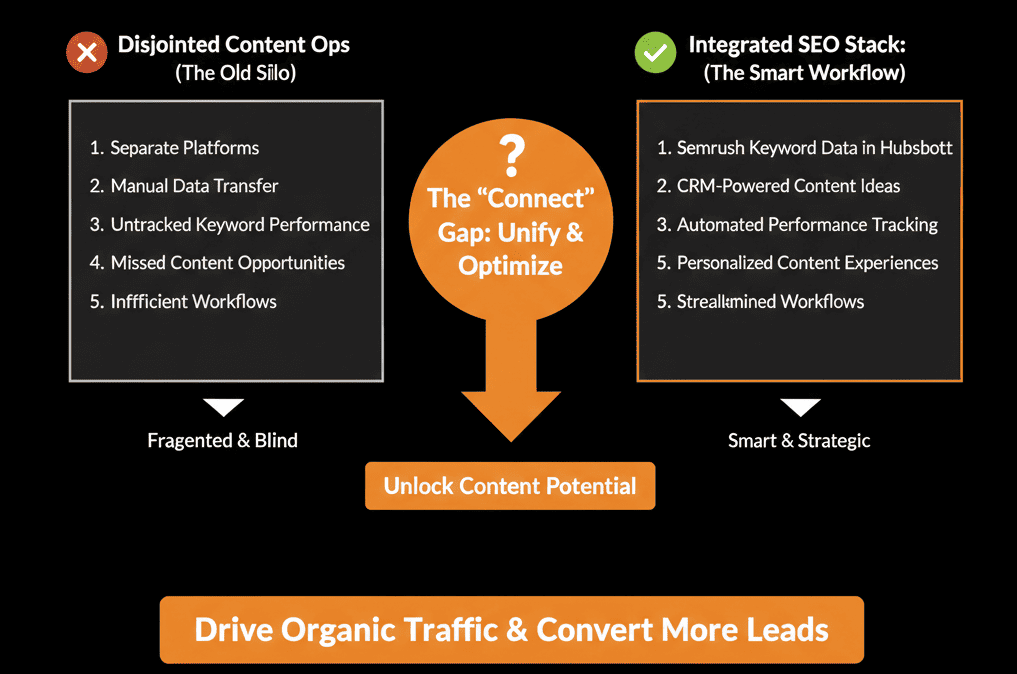
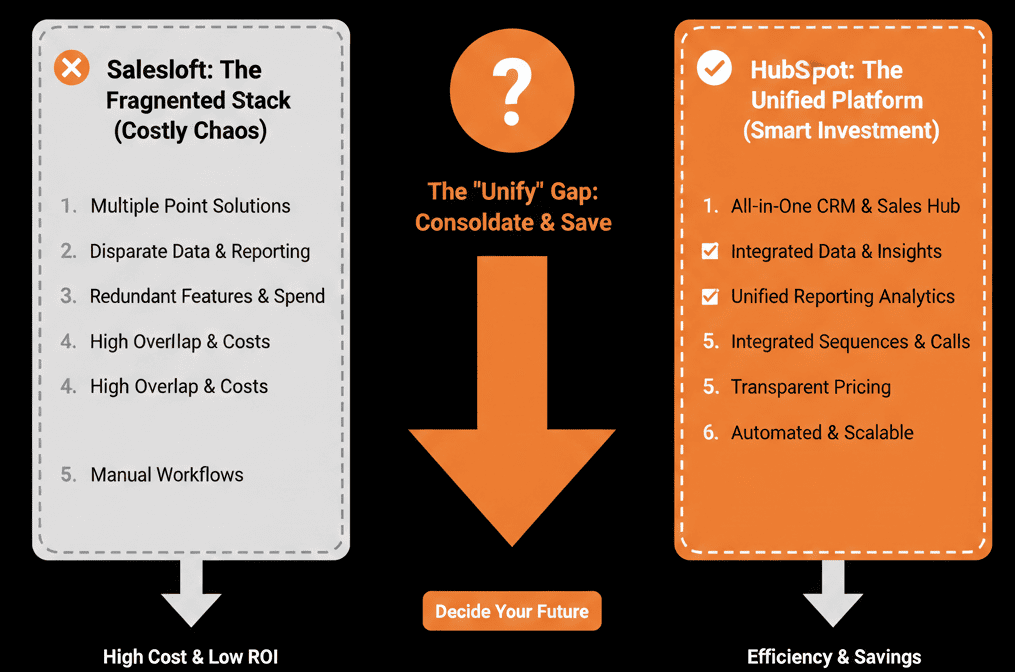
The HubSpot Math: HubSpot connects Sales, Marketing, and Service natively. There is no Zapier tax. There is no "integration consultant." The TCO of "One Platform" is often lower than the TCO of "5 Bolted-On Tools."
📉 2. The Cost of "Low Adoption" (Shelfware)
The Cheap Scenario: You buy Salesforce Essentials because it's the "industry standard." It costs $25/user.
- The Result: They don't use it. They work in Excel.
- The Cost: You are paying for "Shelfware." If you pay $5,000/year for a CRM that only captures 20% of your data, your "Cost per Record" is astronomical.
The HubSpot Math: HubSpot is built for the end-user. It is intuitive. It automates data entry.
📉 3. The Cost of "Leaked Revenue"
The Cheap Scenario: You use a "manual" lead handoff (email notifications).
- A lead comes in. It sits in an inbox for 4 hours.
- The "speed to lead" is slow.
- The Math: If your "Lead-to-Opportunity" rate drops from 15% to 10% because of slow follow-up, and your average deal size is $20k... you are losing $100k+ per year in missed revenue.
The HubSpot Math: HubSpot's automation (Workflows) ensures instant lead rotation, creating a task for a rep in seconds.
📉 4. The Cost of "Developer Dependency"
The Cheap Scenario: You want to change a field in your CRM or update a workflow in your custom-built system.
- The Problem: You can't do it. You need to call IT. You need to hire a developer.
- The Cost: Time. You wait 2 weeks for a simple change. Agility is lost.
The HubSpot Math: HubSpot is "No-Code." Your RevOps manager (or even a VP of Sales) can build a report, change a pipeline stage, or update a workflow in minutes.
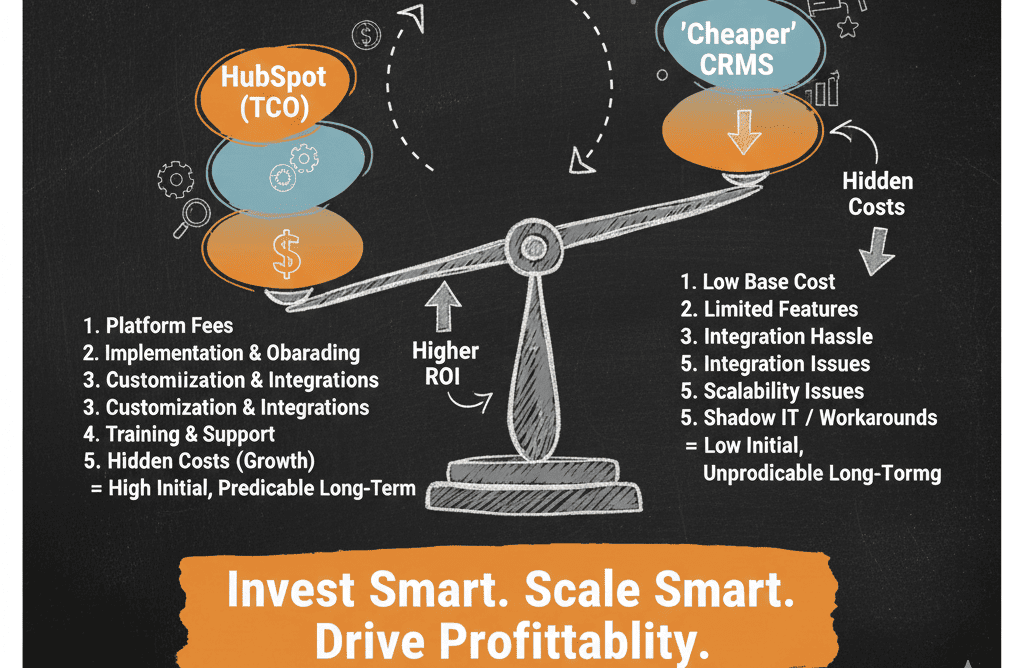
The Value Equation
TCO = License Fee + Integration Costs + Admin Salaries − Revenue Generated
- "Cheap" CRMs: Low License + High Integration + High Admin - Low Revenue = High TCO.
- HubSpot: Higher License + Zero Integration + Low Admin - High Revenue = Negative TCO (Profit).
You are not buying a contact book. You are buying a Revenue Operating System.
Don’t guess the ROI. Calculate it.
See the Math Before You Sign
We don't just "quote you a price." A HubSpot Gold Partner will analyze your current tech stack spend (including the hidden costs of Zapier, shelfware, and lost leads) and build a custom ROI model comparing your "Current State" vs. "HubSpot Future State."
Get Your Free Migration & ROI Plan Today